
Why Sourcing Is a Competitive Advantage
The product sourcing decision determines more of an e-commerce business’s fundamental economics than any other single decision: the product cost that determines the gross margin available for all other business activities, the quality level that determines the customer experience and return rate, the lead time that determines inventory management complexity and customer delivery speed, and the minimum order quantities that determine the capital requirements for getting started and scaling. Getting sourcing right is foundational to business viability; getting it wrong creates problems that cannot be fixed by any amount of marketing or customer service excellence.
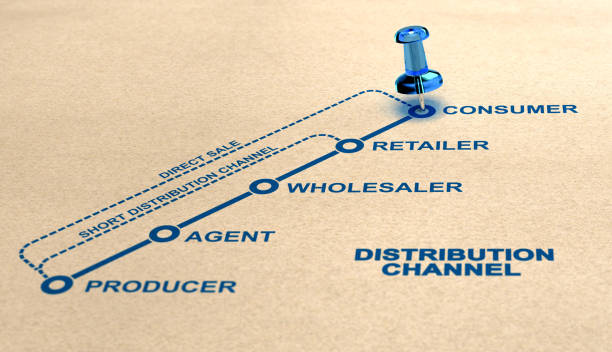
The sourcing advantage that most durably differentiates e-commerce brands from competitors: direct relationships with manufacturers rather than with intermediaries. The brand that sources directly from the manufacturer of its products gets the manufacturer’s cost structure, the ability to customise products, the earliest access to new product development, and the relationship depth that produces priority treatment when manufacturing capacity is constrained. The brand that sources through distributors or sourcing agents gets a higher cost structure and less control over product quality and supply chain reliability.
Finding Suppliers: Where to Look
The supplier discovery channels that most commonly produce quality manufacturer relationships: trade shows and industry exhibitions where manufacturers present their capabilities to potential buyers directly, industry-specific sourcing platforms that aggregate manufacturer listings with quality verification, direct outreach to manufacturers identified through competitor product research, and sourcing agents who have established relationships with manufacturer networks in specific regions or product categories.
The online sourcing platforms most commonly used for different product types: Alibaba and Global Sources for products sourced from Chinese manufacturers across most product categories, Made-in-China for Chinese manufacturer discovery with additional B2B focus, ThomasNet and Maker’s Row for domestic US manufacturers in various industrial and consumer product categories, and Faire for wholesale purchasing from independent brands. Each platform has different strengths, different minimum order requirements, and different quality verification standards — understanding these differences before committing to a supplier search on any one platform prevents mismatched expectations.
Evaluating Suppliers Before Committing
The supplier evaluation process that most reduces the risk of a problematic supplier relationship: a structured assessment that covers factory verification (does the factory actually exist and have the equipment and capacity it represents?), quality certification (does the supplier have relevant quality certifications appropriate for the product category?), reference customers (can the supplier provide and do references confirm the supplier’s reliability and quality consistency?), sample order (does the actual product quality match what was represented in marketing materials and specifications?), and minimum order requirements (are the minimums consistent with the business’s current volume and capital position?).
The sample order evaluation that most completely tests a supplier’s capability: not just evaluating the product quality of the sample but evaluating the supplier’s communication responsiveness during the sample process, the packaging quality, the accuracy of the delivery timeline quoted, and the ability to modify the product in response to specific feedback. The supplier who delivers a good sample but is slow to communicate, ships in substandard packaging, delivers late, and cannot accommodate reasonable modification requests is showing exactly how they will perform when larger orders are placed — and this preview is valuable information that a laboratory product quality test alone does not provide.
Negotiating With Suppliers
The supplier negotiation principles that most improve the terms obtained: approaching the negotiation as a relationship investment rather than as a transaction extraction, demonstrating genuine long-term buying intent rather than treating the supplier as a commodity price to be minimised, and finding the areas where the supplier has flexibility — often payment terms, product customisation, or lead time rather than unit price at initial volumes — rather than focusing exclusively on price reduction.
The specific negotiation elements most worth attention beyond unit price: payment terms, which affect the business’s cash flow and working capital requirements (the shift from payment in advance to net thirty days of delivery is more valuable to the business’s cash position than a five percent price reduction), minimum order quantities, which affect inventory investment and cash tied up in stock, and exclusivity or semi-exclusivity provisions, which can prevent the same supplier from producing identical products for direct competitors.
Managing Supplier Relationships Over Time
The supplier relationship management discipline that most reliably produces the best terms, quality, and service over time: treating the supplier as a genuine business partner rather than as an interchangeable vendor. The buyer who communicates transparently about their business plans, pays on time and as agreed, provides clear and specific quality feedback, and shares the successes that the supplier’s product has enabled builds a relationship that produces priority treatment when capacity is constrained, early access to new product capabilities, and the supplier’s proactive identification of quality or supply issues before they become shipment problems.
The supplier diversification strategy that most effectively manages supply chain risk while maintaining relationship depth: at minimum two approved suppliers for every critical product, with primary supplier relationships deep enough to be the first priority for those suppliers’ capacity, and secondary supplier relationships maintained through regular small orders to ensure the relationships remain active and the supplier retains familiarity with the product requirements. The single-source supplier is a concentrated risk that most businesses underestimate until a quality problem, capacity constraint, or geopolitical disruption demonstrates its cost.
