
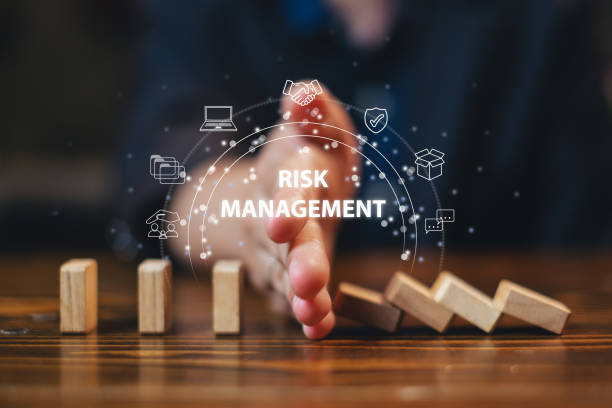
The Risk Management Philosophy That Drives Better Decisions
The risk management orientation that most clearly produces the business resilience that risk management is designed to create: the recognition that every business decision involves the acceptance of some risks and the rejection of others, and that the management goal is not the elimination of risk (which would require the elimination of all business activity) but the deliberate, informed selection of the risks the business is willing to accept in pursuit of its objectives and the systematic reduction of the risks that exceed the business’s risk appetite without producing commensurate expected reward. The business that avoids all risk avoids all growth; the one that accepts all risk without systematic management accepts the fragility that the concentrated, unmanaged risks most commonly produce.
The enterprise risk management (ERM) framework value that most clearly justifies the investment in a structured approach to risk identification and management: the comprehensiveness that the structured framework provides versus the reactive, incident-driven risk management that identifies risks only after they have begun to materialise as losses. The ERM process that systematically identifies the specific risks across all dimensions of the business — the strategic risks that most threaten the business model’s long-term viability, the operational risks that most threaten the day-to-day business continuity, the financial risks that most threaten the business’s liquidity and solvency, and the compliance risks that most threaten the business’s legal standing — provides the management with the complete risk landscape that most enables the informed decisions about which risks to mitigate, which to transfer, and which to accept.
Risk Identification Methods
The risk identification approaches that most comprehensively reveal the specific risks that the business faces: the structured risk workshop that brings together the senior leadership team and the functional managers to systematically consider the risks in each risk category (strategic, operational, financial, compliance, reputational) through the facilitated discussion that most commonly surfaces the risks that no individual participant would have identified independently because they require the combined knowledge of multiple functions to identify. The risk workshop that produces the comprehensive risk inventory rather than the list of risks that any single function or senior manager would have identified from their individual perspective is the workshop that most effectively establishes the starting point for the complete risk management programme.
The environmental scanning approach that most effectively identifies the emerging risks that the internal perspective most commonly misses: the systematic monitoring of the external environment — the regulatory developments that may affect the business’s operating requirements, the technology changes that may disrupt the business’s market position, the competitive moves that may threaten the business’s customer relationships, and the macroeconomic trends that may affect the business’s demand or cost structure — for the specific signals that most clearly indicate the materialisation of risks that the current internal focus has not yet recognised. The business that monitors these external signals systematically identifies the emerging risks early enough to develop the mitigation strategies before the risk fully materialises; the one that identifies them only when they have become problems has accepted the management crisis that early identification would have replaced with orderly preparation.
Risk Assessment and Prioritisation
The risk assessment framework that most effectively prioritises the management attention and the mitigation investment across the full risk inventory: the probability-impact matrix that evaluates each identified risk by the likelihood that the risk will materialise (the estimated probability, ranging from rare to almost certain, based on the historical frequency and the current conditions) and the magnitude of the impact if it does materialise (the estimated financial, operational, and reputational consequence, ranging from negligible to catastrophic). The risk assessment that places each identified risk in the probability-impact matrix most clearly reveals the risks that warrant the most urgent management attention (the high-probability, high-impact risks whose concentration in the upper-right quadrant of the matrix most directly threatens the business) and the risks that warrant the monitoring without active mitigation (the low-probability, low-impact risks whose management cost most exceeds their expected value reduction).
The risk assessment calibration that most accurately reflects the specific business’s actual risk exposure rather than the generic industry risk profile that the uncalibrated assessment most commonly produces: the incorporation of the business’s specific circumstances — the specific supplier concentration, the specific customer concentration, the specific geographic footprint, the specific regulatory exposure — into the probability and impact estimates that the generic industry risk taxonomy would not reflect with the specificity that the business’s actual risk profile requires. The high supplier concentration in a single critical supplier is a risk whose probability and impact the generic industry assessment may understate for the specific business whose operations would be most severely disrupted by that specific supplier’s failure.
Risk Mitigation Strategies
The risk mitigation strategy selection for each prioritised risk that most efficiently reduces the risk to the business’s acceptable level at the minimum mitigation cost: the four fundamental mitigation approaches — the risk avoidance that eliminates the activity that creates the risk (the business that exits the geographic market whose regulatory risk most exceeds its risk appetite), the risk reduction that implements the specific controls that reduce the probability or the impact of the risk materialising (the business continuity plan that most reduces the operational disruption duration when the critical system fails), the risk transfer that shifts the financial consequence of the risk to a third party (the insurance policy that covers the specific liability risk, the contract provision that assigns specific risks to the counterparty), and the risk acceptance that explicitly acknowledges the risk and its potential consequence without specific mitigation (appropriate for the risks whose mitigation cost most exceeds the expected value reduction the mitigation would produce).
The residual risk management — the ongoing attention to the risks that remain after the mitigations have been implemented — that most effectively ensures the mitigation remains effective as the risk environment changes: the periodic risk reassessment that evaluates whether the mitigations that were designed for the risk environment at the time of their implementation remain effective in the current risk environment. The business continuity plan that was designed for a specific operational disruption scenario may be inadequate for the different disruption scenario that the changed business model, the changed technology infrastructure, or the changed supply chain has created — and the periodic reassessment that identifies this inadequacy before the disruption occurs is the risk management discipline that most protects the business from the false security that an outdated mitigation most commonly provides.
Building the Risk Culture
The organisational risk culture characteristic that most enables the risk management programme to produce the genuine risk reduction rather than the compliance documentation that most risk management programmes generate without the cultural foundation that makes risk awareness a daily management practice: the senior leadership’s visible personal commitment to the risk management discipline demonstrated through the specific decisions they make and the specific questions they ask. The CEO who consistently asks about the specific risks associated with the proposed strategic initiative in the management team discussions, who reviews the risk register in the board presentations, and who adjusts the business’s activities when the risk assessment reveals the concentration has exceeded the risk appetite is demonstrating the personal commitment that most clearly signals to the organisation that risk management is a genuine management discipline rather than the compliance exercise that its absence from the executive conversation most reveals it to be.
The risk escalation culture that most effectively ensures the organisation’s risk management system receives the information about the specific emerging risks and the specific control failures that the board and the senior leadership need to make the informed decisions that risk management requires: the explicit protection of the individuals who identify and report risks from the career consequences that discouraging news can produce when the management culture treats problem identification as a performance deficiency rather than as the valuable early warning that the risk management system is designed to generate. The organisation whose managers consistently learn about risks through the media or through customer complaints rather than through the internal risk escalation that the managers closest to the risks should provide has a risk culture that most consistently produces the surprises that effective risk management is specifically designed to prevent.
