
The Technology Landscape Transforming Manufacturing
Manufacturing technology has entered a period of rapid transformation driven by the convergence of several technologies that have individually been developing for decades but are now sufficiently mature and cost-effective to deploy at commercial scale. Industrial automation and robotics have become cheaper and more flexible; sensor technology and the Internet of Things have made it practical to instrument entire production facilities; advanced analytics and artificial intelligence are making it possible to extract actionable insight from the data that sensors collect; and additive manufacturing (3D printing) is expanding the range of geometries and materials that can be produced economically in small quantities.
The manufacturing technology investment evaluation framework that most prevents the adoption of technology that generates impressive demonstrations without generating business returns: starting with the specific operational problem to be solved rather than with the technology that seems most impressive. The technology that addresses a real, costly operational problem — unplanned downtime, quality variation, materials waste, labour productivity — has a clear business case. The technology adopted because competitors are adopting it, because trade publications recommend it, or because an impressive demonstration suggested possibilities has a much less certain business case.
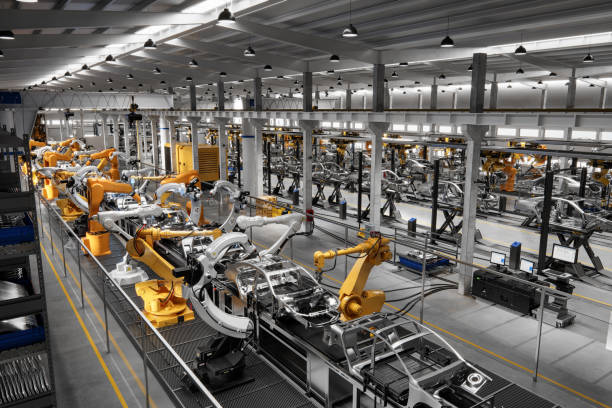
Robotics and Automation
The industrial robotics and automation investments that most consistently produce positive returns in manufacturing: the automation of tasks that are high-volume, repetitive, physically demanding or hazardous, and require consistent precision that human operators struggle to maintain over extended periods. Machine tending, material handling, welding, painting, and assembly of standardised components are the application categories where industrial robots most consistently deliver the productivity improvement, quality consistency, and safety benefit that justify their cost.
The collaborative robot applications that most expand automation to operations previously resistant to conventional robotics: the tasks that benefit from the combination of machine consistency and human dexterity, judgment, or adaptability — the final assembly operations where the robot handles the repetitive physical manipulation and the human operator handles the variability and exception conditions that the robot cannot reliably manage. Collaborative robots working alongside human operators in shared workspaces, without the safety fencing that separates conventional robots from human contact, enable these hybrid human-robot workflows at lower capital cost and with more flexibility than conventional automation.
Data and Analytics in Manufacturing
The manufacturing data and analytics investments with the most consistent positive returns: the applications that turn production data into specific, actionable operational decisions. Predictive maintenance — using machine sensor data and machine learning models to predict when equipment will need maintenance before it fails, enabling maintenance to be scheduled during planned downtime rather than occurring as unplanned downtime — is the analytics application with the most widely documented manufacturing ROI, consistently producing 10 to 25% reductions in maintenance costs and 20 to 50% reductions in unplanned downtime.
The manufacturing analytics implementation approach that most reliably produces value rather than impressive dashboards: starting with a specific operational decision that the analytics will improve — the decision about when to perform maintenance, which quality parameters indicate an out-of-control process, which production orders to prioritise when capacity is constrained — and designing the data collection and analysis specifically to support that decision. The analytics system that produces data without connecting it to a specific decision or a specific user who will act on it produces observations rather than improvements.
Quality Technology: From Inspection to Prevention
The quality technology investments that most consistently improve manufacturing quality outcomes: automated inspection systems that use machine vision and artificial intelligence to inspect 100% of produced parts rather than statistical samples, catching defects at the point of production rather than at the end of the production line or, worse, after shipment to the customer. Machine vision inspection systems can detect defects at production line speeds with a consistency and accuracy that human inspectors cannot maintain over extended shifts, and at a total cost per part that is frequently lower than the combined labour and quality escape cost of human inspection for high-volume production.
The statistical process control technology that most effectively prevents defects rather than detecting them: the real-time SPC system that monitors production process parameters continuously, displays control charts to operators in real time, and alerts when control limits are approached or exceeded rather than only after they are violated. The operator who receives an alert when a critical process dimension is trending toward the control limit can make a preventive adjustment before any out-of-specification parts are produced; the one who receives alert only after the limit has been violated is correcting a problem that has already produced defective output.
Digital Twins and Simulation
The digital twin technology application that most improves manufacturing decision quality: the virtual replica of a production system — a computer model that simulates the physical behaviour of the actual production line, including equipment, material flows, operator actions, and process parameters — that allows production scenarios to be tested virtually before they are implemented physically. The production line redesign, the new product introduction, the scheduling algorithm change, and the equipment replacement decision can all be simulated in the digital twin before the physical change is made, revealing the performance implications of the change without the risk and cost of implementing it in the actual production environment.
The digital twin investment economics that most justify the implementation cost: the manufacturing contexts where the cost of physical experimentation is high — where a trial production run of a new product configuration costs tens of thousands of dollars, where a production line reconfiguration requires days of downtime, or where a scheduling change that turns out to be suboptimal disrupts customer delivery commitments. In these contexts, the digital twin’s ability to run multiple virtual experiments at negligible cost provides a return that is immediate and clearly attributable to the technology investment.
